 EN
EN  Bulgarian
 Greek
Greek
 Magyar
 Czech
Czech
 Deutsch
 Hrvatski
 Slovenšcina
 Polish
 Slovencina
What you will discover in this guide
- Natural pearl necklaces and how they have changed in recent years
- What are cultured natural pearls, actually?
- Why have pearl necklaces made such a strong comeback?
- Comparison table – classic pearl necklace lengths
- Classic pearl necklace lengths
- Small pearls vs large pearls
- Comparison table – pearl sizes
- Pearl sizes and their visual effect
- Comparison table – the main types of natural pearls
- The difference between Akoya, Edison, Tahitian, South Sea and freshwater pearls
- Round pearls vs baroque pearls
- How does pearl colour influence the look of a necklace?
- Comparison table – the main natural pearl colours
- How do you choose a pearl necklace if it is your first one?
- What we have learned over the years about choosing pearl necklaces
- How should pearl necklaces be cared for?
- Why do pearl necklaces continue to work so well in modern fashion?
Natural pearl necklaces and how they have changed in recent years
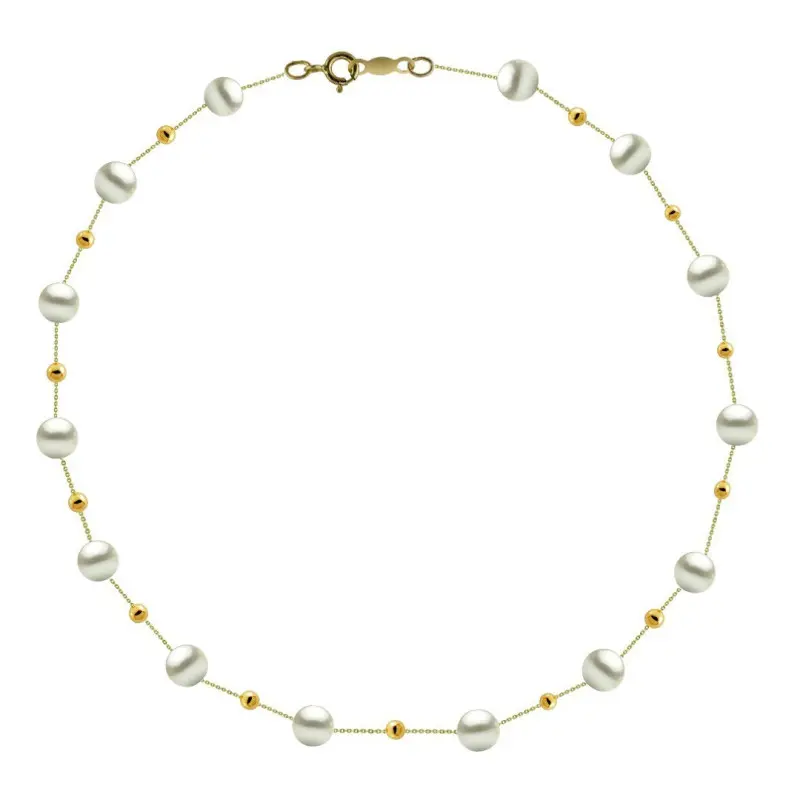
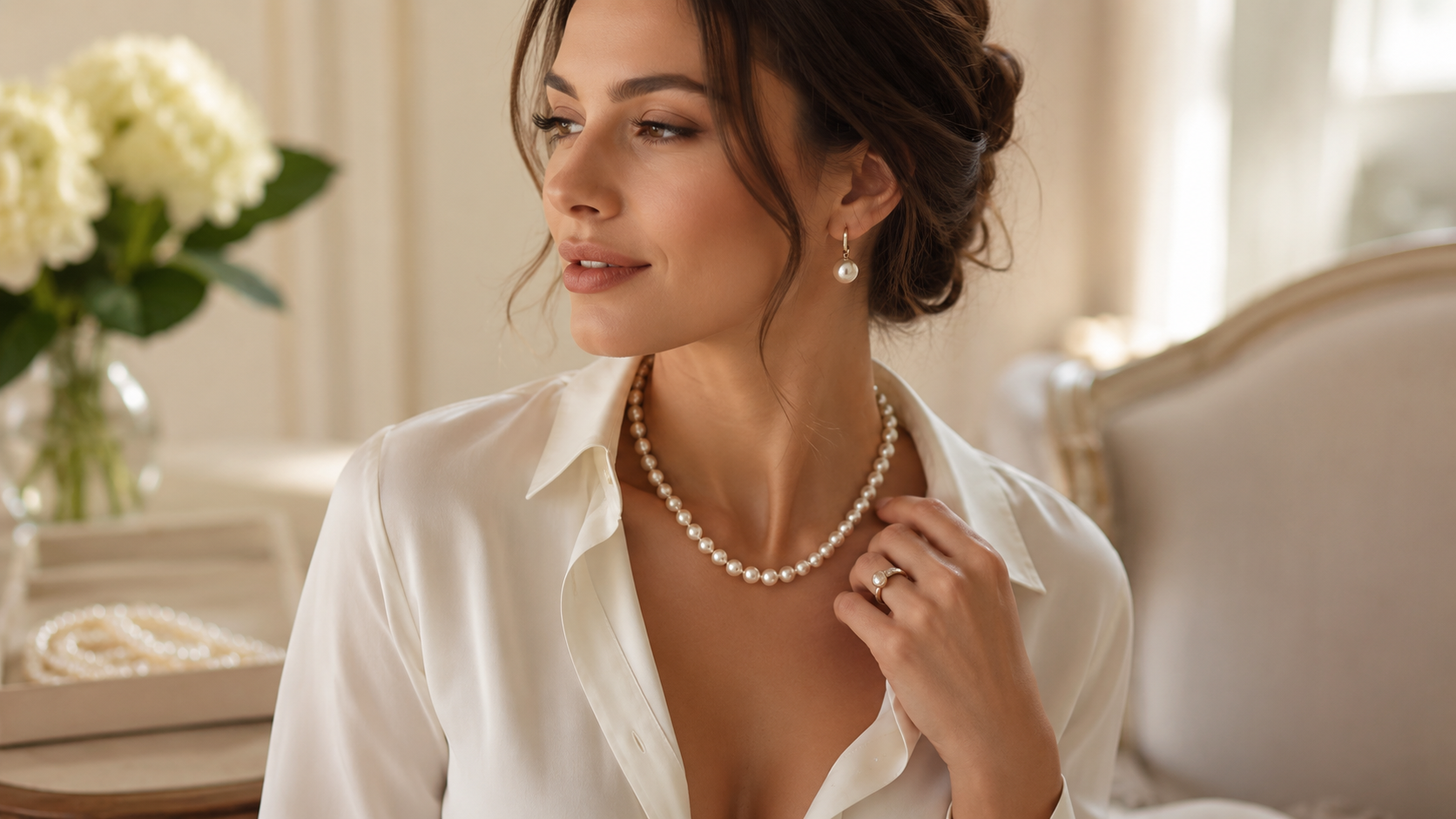
Pearls were long associated with jewellery reserved for very elegant outfits or styles considered more classic. Many people still imagine a rigid pearl necklace made of perfectly identical pearls, worn only at formal events. In reality, things have changed dramatically in recent years.
Today, natural pearl necklaces are frequently integrated into contemporary, minimalist and even relaxed styling. They appear alongside oversized shirts, simple T-shirts, masculine blazers or flowing dresses, and it is precisely this contrast between the natural elegance of pearls and modern clothing that has made them incredibly popular again.
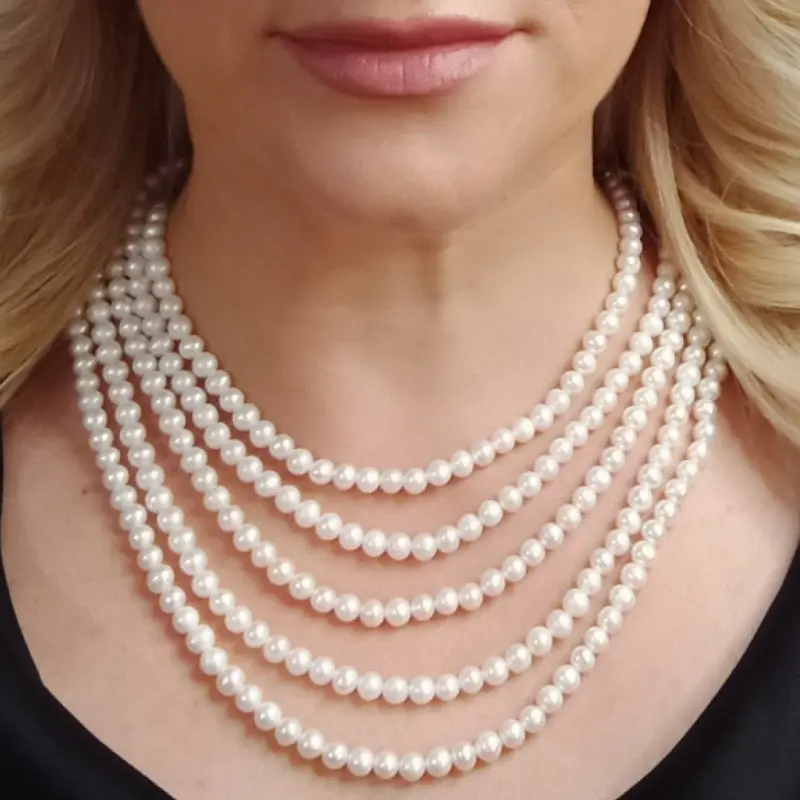
A large part of this comeback comes from the fact that pearls are no longer worn in a rigid way. Delicate necklaces, subtle layering and combinations of different lengths have completely transformed the classic image of pearl jewellery.
In addition, many women today are looking for accessories that do not feel artificial or excessively ornate. Natural pearls have exactly that type of presence that stands out without aggressively dominating the entire outfit. Light reflects differently on their surface, and each pearl has subtle variations that make the jewellery feel alive.
The growing interest in natural materials and jewellery crafted with greater attention to detail has also contributed to this return. At a time when so many accessories are mass-produced and look almost identical, natural pearls still retain an organic character that many people are once again drawn to.
This guide has been created to explain in detail the main types of pearl necklaces, the differences between Akoya, Edison, Tahitian and South Sea pearls, the way pearl size influences the look of a necklace, and how certain lengths or shapes can completely change the visual effect of a piece of jewellery.

What are cultured natural pearls, actually?
Cultured natural pearls are pearls formed inside oysters or molluscs through the gradual layering of nacre over many years. The process itself is natural, but it is initiated and supervised in specialised pearl farms. The only difference between natural pearls and cultured natural pearls lies in how the formation process begins: in the case of natural pearls, the particle that triggers the nacre deposition enters the oyster accidentally, while in cultured pearls it is introduced in a controlled way to initiate the natural nacre-forming process.
Many people confuse the term “cultured pearls” with artificial pearls, but these are completely different things. Artificial pearls are industrially manufactured from synthetic materials or cores coated with layers designed to imitate nacre. Cultured natural pearls, on the other hand, are biologically formed inside the oyster.
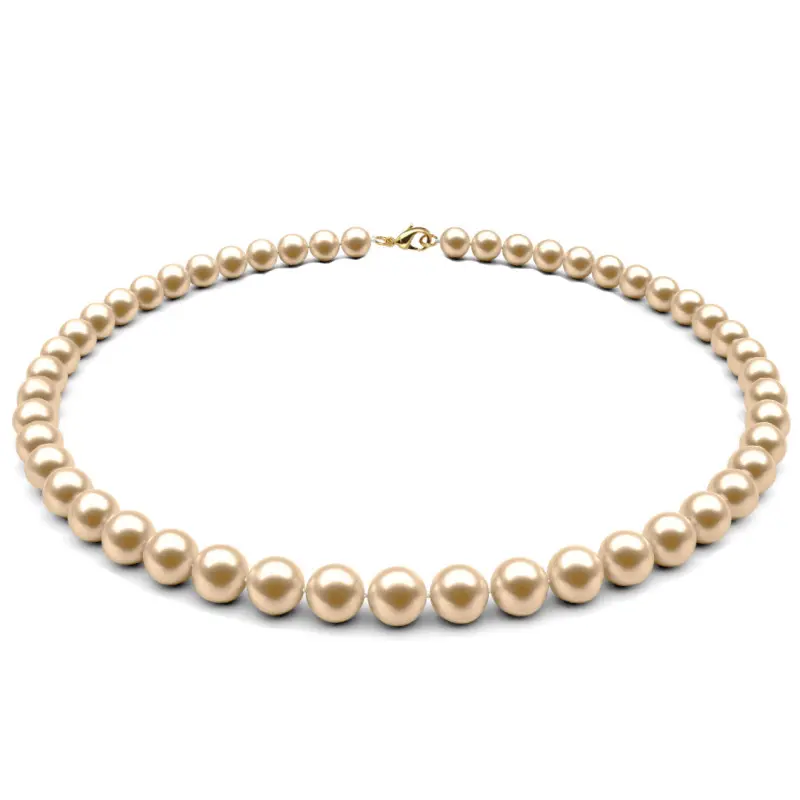
That is why light behaves differently on the surface of a natural pearl. The reflection is not flat or metallic, but deep and nuanced. In natural light, the difference between a genuine pearl and an imitation becomes quite noticeable, especially in higher quality pieces.
Another important aspect is that natural pearls are never perfectly identical. Even in very carefully matched necklaces, there are subtle differences that may be almost impossible to notice individually, yet enough to give the jewellery a more natural appearance.
Several criteria are considered when evaluating natural pearls:
- lustre;
- surface;
- shape;
- symmetry;
- colour;
- size.
Lustre is probably the most important element when looking at a pearl necklace. Two necklaces may have the same size and colour, yet one can appear far brighter and visually more beautiful because of the quality of its nacre.
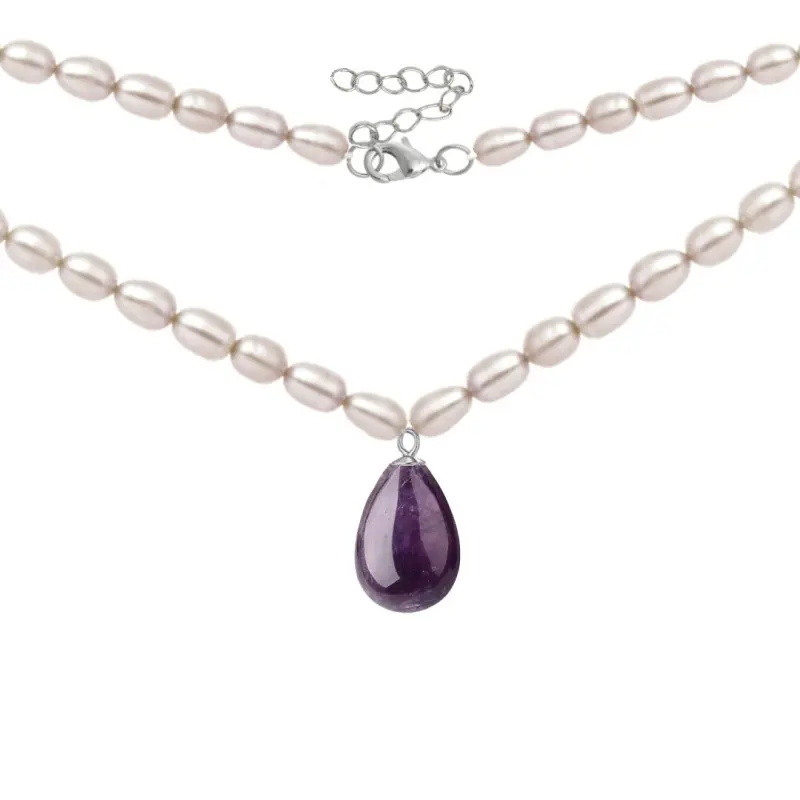
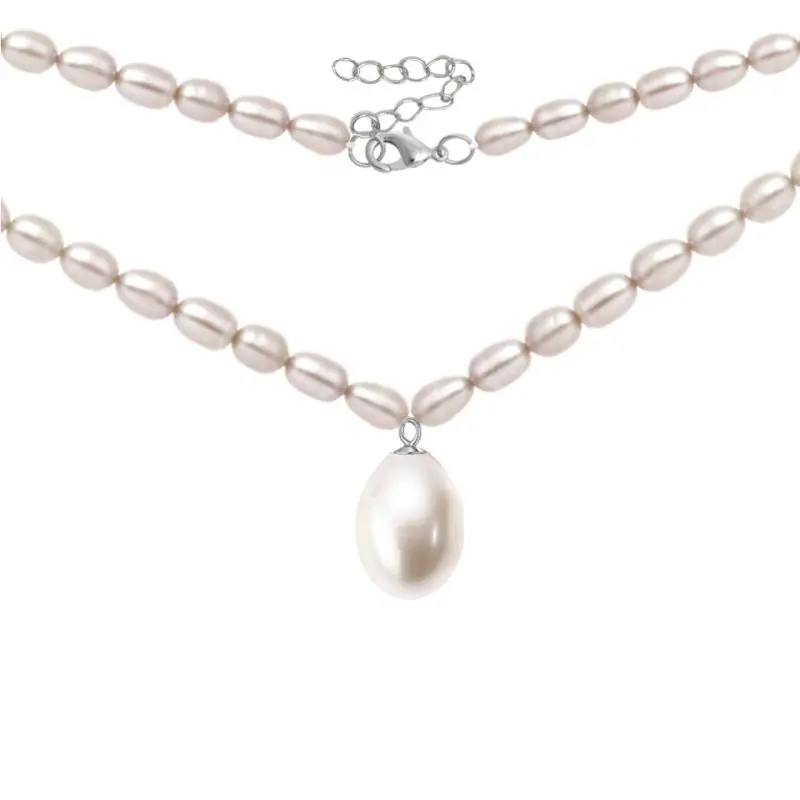
Shape also has a major influence on the style of the jewellery. Perfectly round pearls create a cleaner, more classic appearance, while baroque or oval pearls bring more personality and a more contemporary feel.
Why have pearl necklaces made such a strong comeback?
One of the main reasons is that modern styling has changed significantly. Today’s outfits are more relaxed, cleaner and less overloaded than they were a few years ago, and pearls work surprisingly well within this type of wardrobe.
A small pearl necklace can completely transform the look of a simple shirt or blazer without making the outfit feel overly elegant. It is precisely this subtlety that has encouraged many women to wear pearls again.
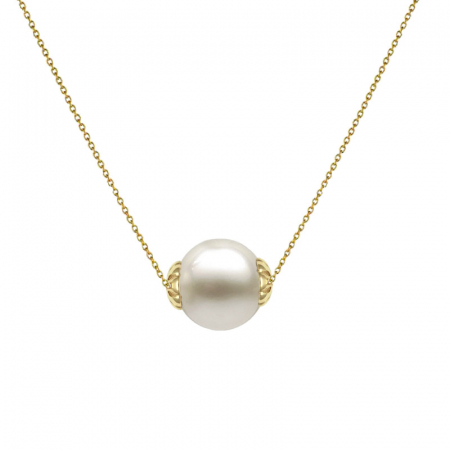
At the same time, layering has played a very important role. In the past, pearl necklaces were almost always worn on their own. Today, they are frequently combined with delicate chains, minimalist pendants or other necklaces in different lengths.
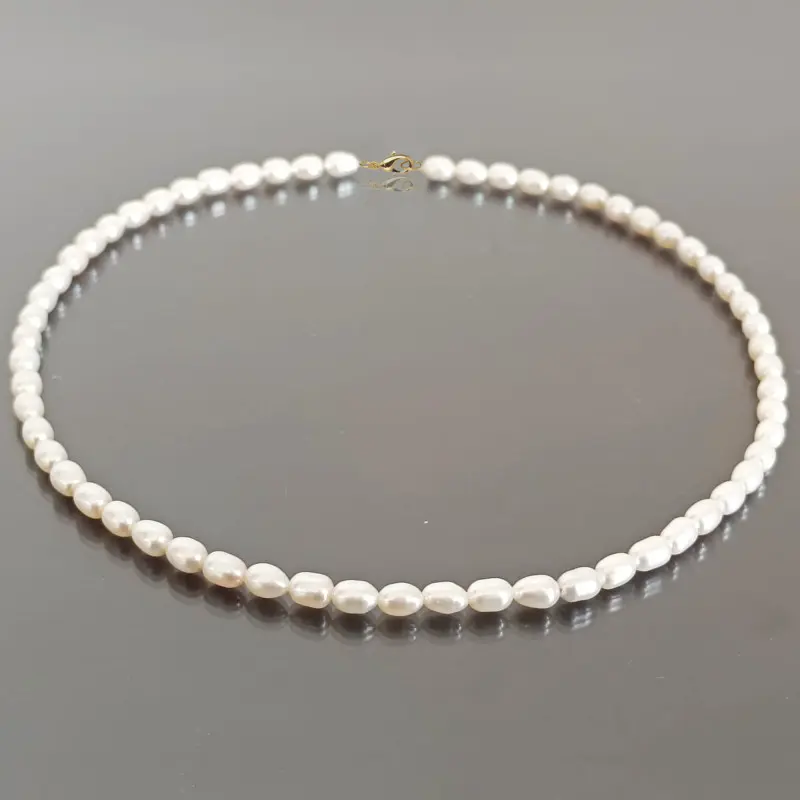
Small pearls have also contributed greatly to this change. Large, classic pearl necklaces can be more difficult to integrate into a modern wardrobe, while a delicate strand of 4–5 mm or 5–6 mm pearls can look completely natural in an everyday outfit.
Another reason pearls have become so popular again is that many women are searching for jewellery that does not depend heavily on aggressive trends. Some accessories look spectacular for one season and completely outdated a few years later. Pearls do not work that way. They adapt effortlessly depending on the styling.
How pearl necklaces are worn today
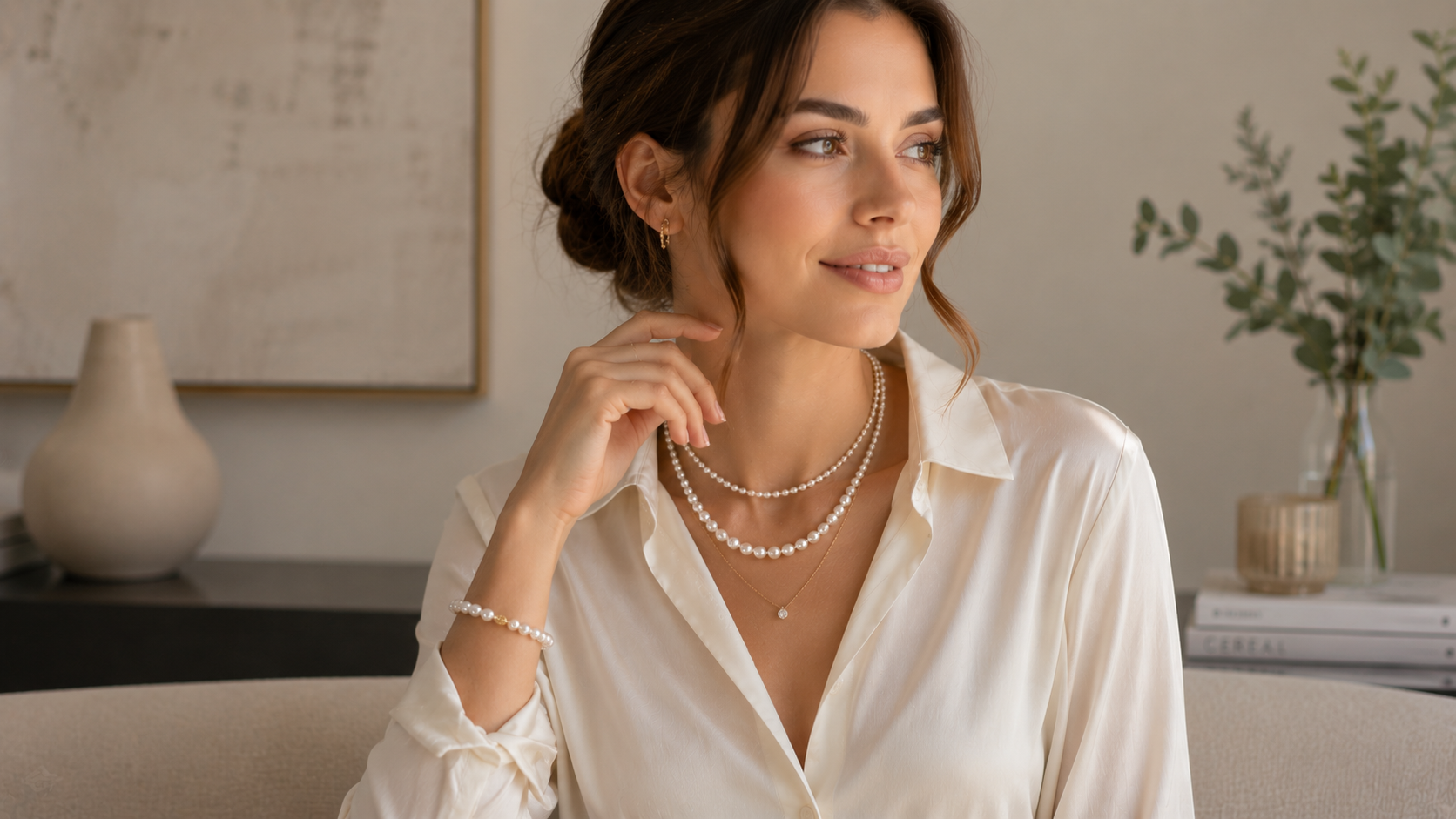
In recent years, the way pearls are worn has changed considerably. More and more women are choosing finer necklaces that can easily be integrated into everyday outfits, not only elegant occasions. They are frequently worn with simple shirts, minimalist tops, relaxed blazers or delicate layered jewellery combinations.
Small pearl necklaces and models with a more natural appearance are often preferred because they feel more relaxed and modern. At the same time, very uniform necklaces with large, perfectly round pearls remain highly appreciated for events, elegant outfits and more sophisticated appearances.
Comparison table – classic pearl necklace lengths
| Length type | Approximate size | How it sits | Style and visual effect |
|---|---|---|---|
| Collar | 30–33 cm | Very close to the base of the neck | Elegant, noticeable, strong focus on the collarbone |
| At the base of the neck / Choker | 35–40 cm | At the base of the neck | Modern, easy to style, perfect for layering |
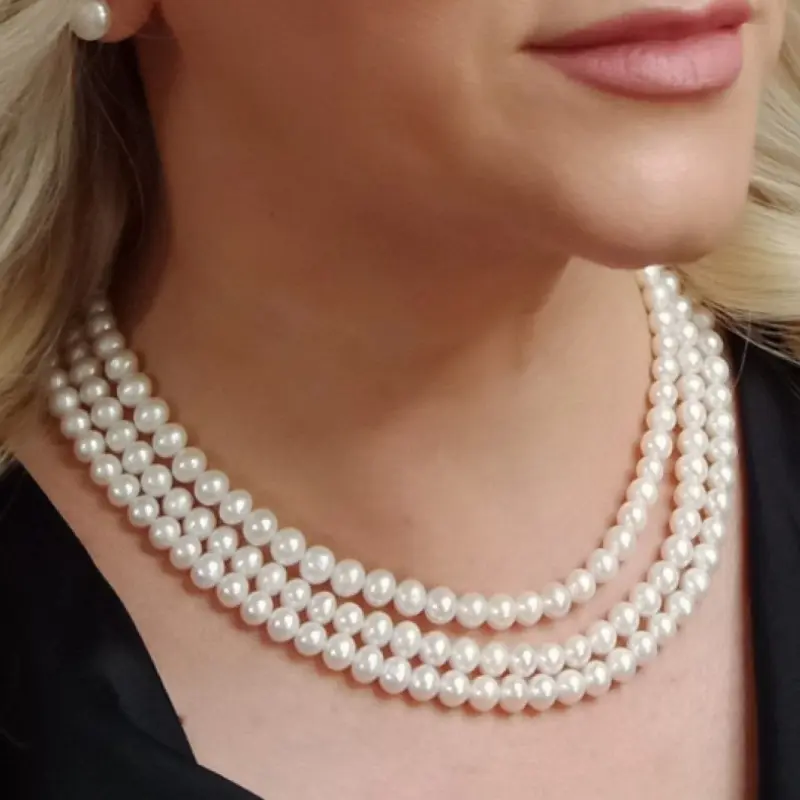
| Princess | 43–48 cm | Slightly below the collarbone | Balanced, versatile, suitable for most outfits |
| Matinee | 50–60 cm | Lower than the collarbone | Fluid, elegant, visually elongates the silhouette |
| Opera | 70–90 cm | Over the bust | Visual movement, contemporary styling |
| Rope | Over 90 cm | Very long | Layering, artistic styling, great flexibility |
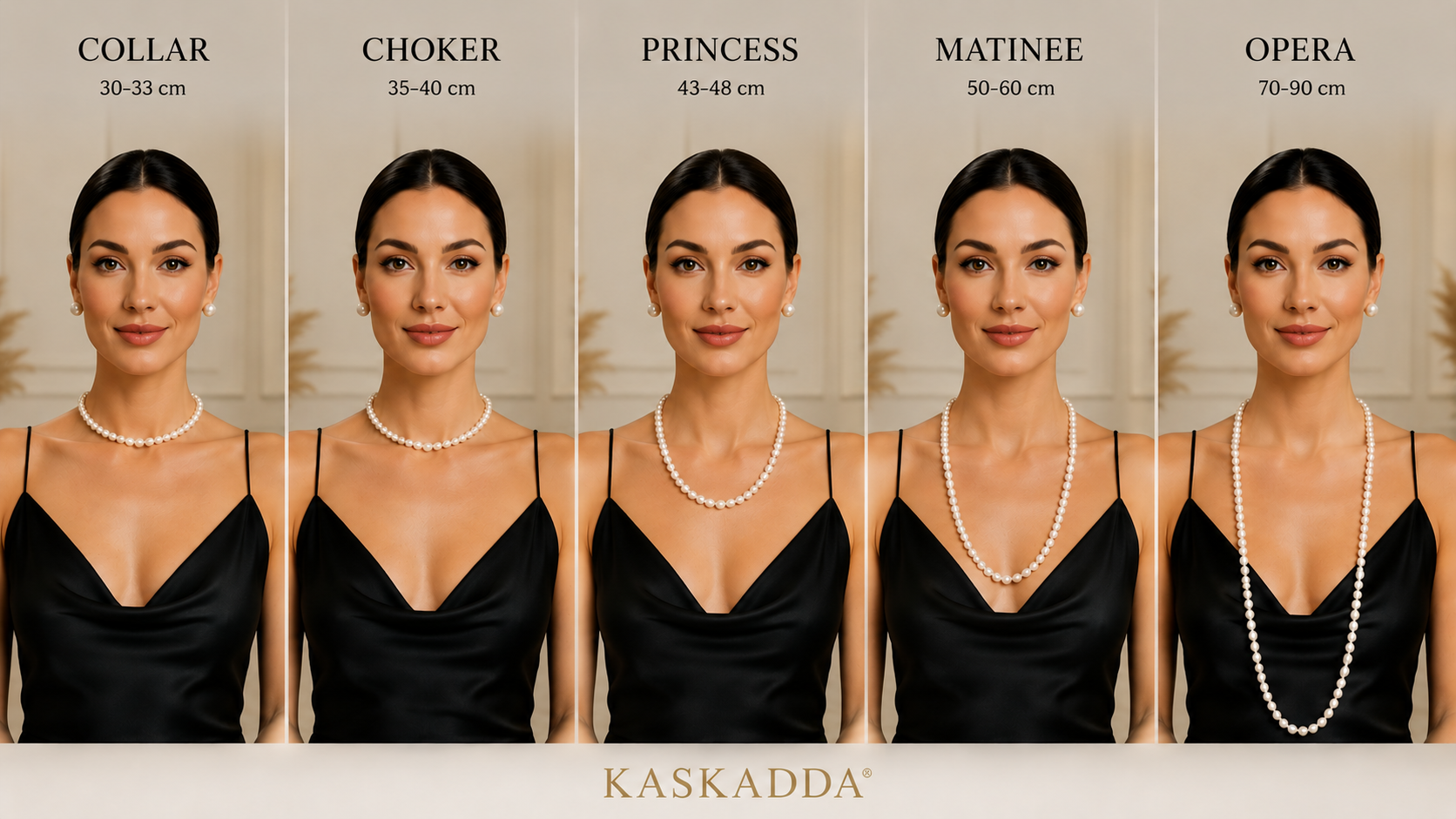
Classic pearl necklace lengths
The length of a necklace greatly changes the way it looks on the neck and how it complements an outfit. Sometimes, the very same pearl can appear completely different simply because it is mounted on another length.
Collar – approximately 30–33 cm
The collar necklace is one of the shortest variations and sits very close to the base of the neck. This type of necklace immediately attracts attention and strongly emphasises the collarbone area.
It is not the easiest length to wear every day, but it can look stunning in evening outfits or editorial styling. It works especially well with strapless dresses or very clean necklines.
At the base of the neck / Choker – approximately 35–40 cm
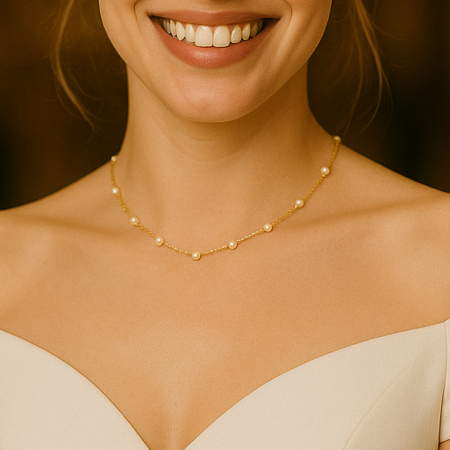
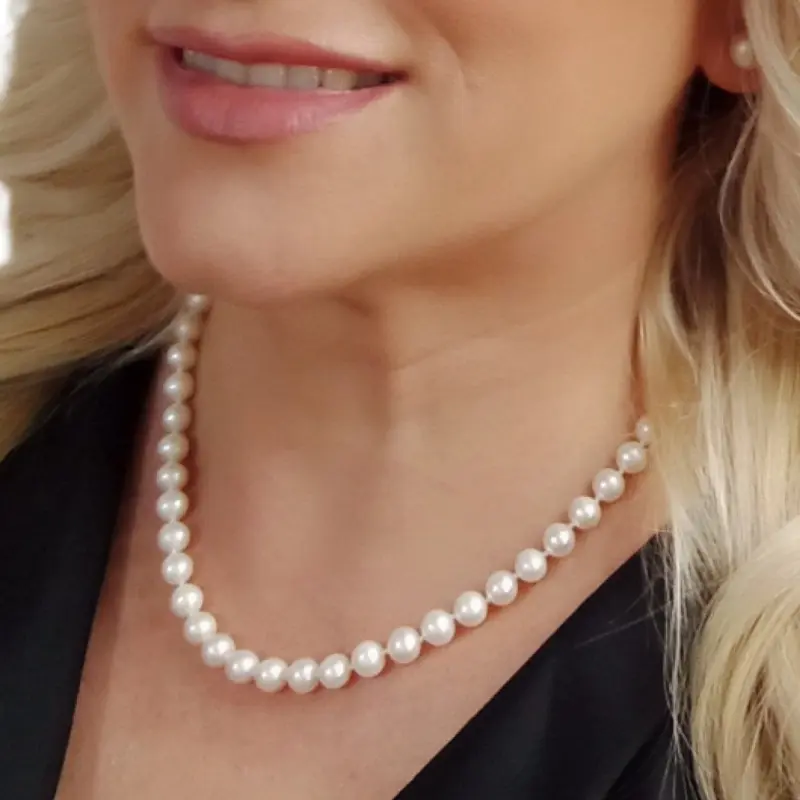
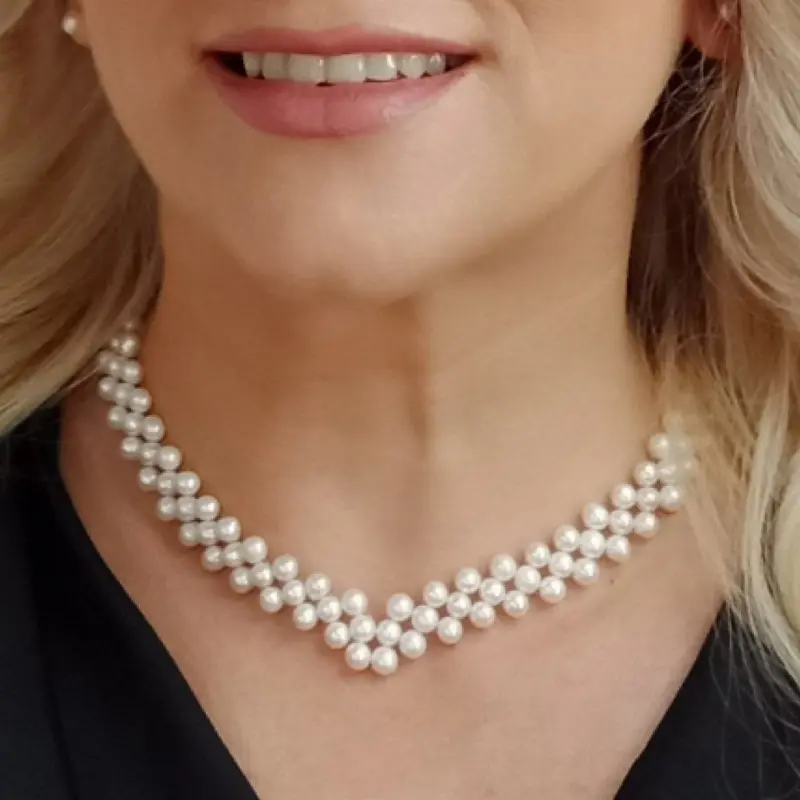
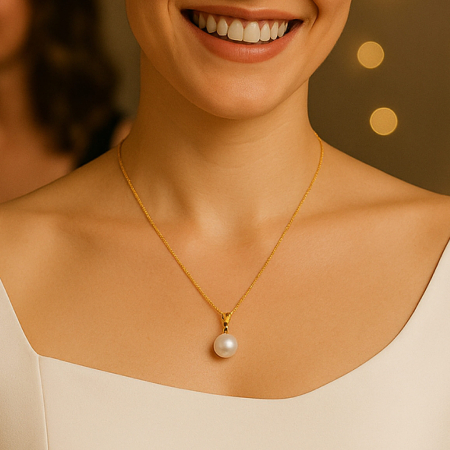
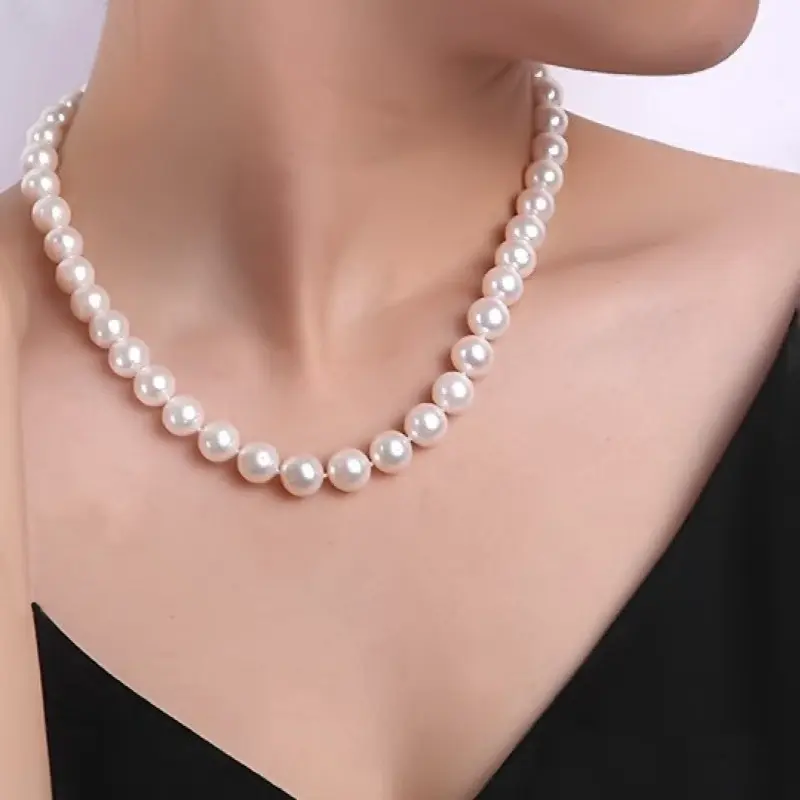
The choker or pearl necklace worn at the base of the neck is probably one of the most popular modern lengths for pearl necklaces. It sits delicately at the base of the neck and can easily be integrated into both elegant outfits and relaxed combinations.
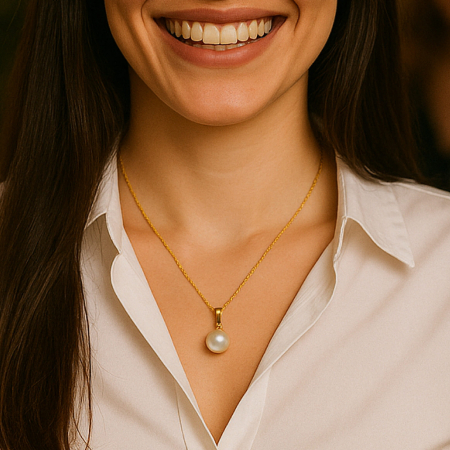
Small pearl chokers are among the most versatile modern designs today. They look beautiful with a slightly open shirt, a simple blazer or a premium monochrome T-shirt.
In addition, this length works extremely well for layering because it leaves enough space for longer necklaces.
Princess – approximately 43–48 cm
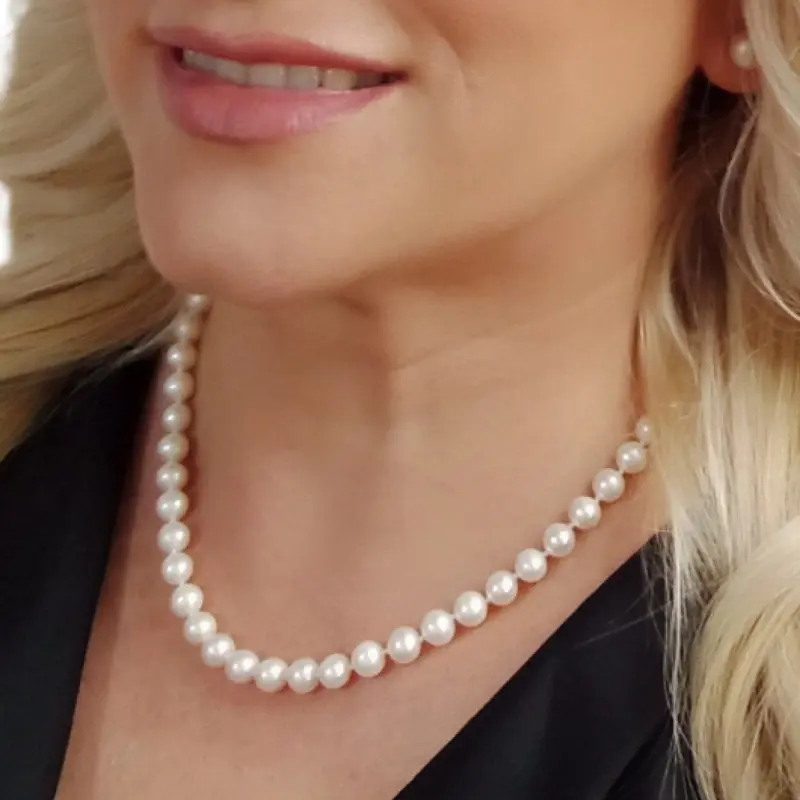
The princess length is considered by many to be the most balanced option for a pearl necklace. The necklace falls slightly below the collarbone and naturally complements most necklines.
It is a very easy length to wear and probably one of the most versatile choices for anyone looking for a single necklace that works beautifully in many different contexts.
Princess models pair especially well with:
- white shirts;
- elegant dresses;
- office outfits;
- round necklines;
- blazers.
Matinee – approximately 50–60 cm
Matinee necklaces have a more fluid appearance and create a longer visual line. They are particularly suitable for elegant daytime outfits and contemporary styling.
Many women appreciate these models because they offer elegance without appearing too rigid or overly classic.
Opera – approximately 70–90 cm
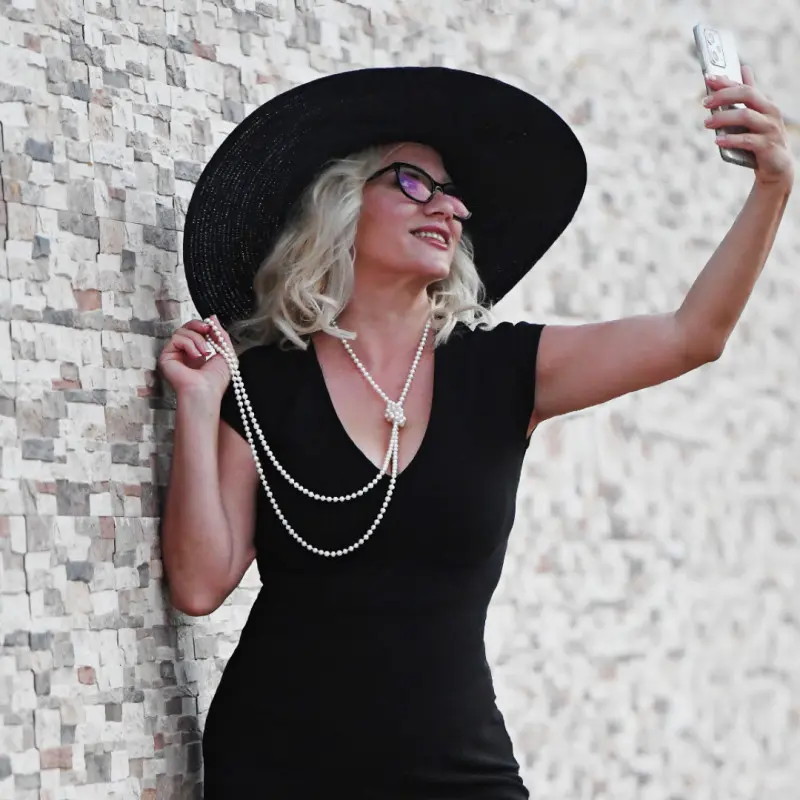
Opera necklaces are long and create a much softer visual effect. They can be worn as a single strand or twisted for a more modern styling.
These models frequently appear in minimalist combinations and editorial styling because they create movement and visually elongate the silhouette.
Rope – over 90 cm
Rope necklaces are the longest models and allow for many different styling options. They can be wrapped into two or three layers and offer exceptional versatility.
They are not the most common models for everyday wear, but in certain combinations they can look spectacular.
Small pearls vs large pearls
The difference between a necklace with small pearls and one with large pearls is not only about size. In reality, it completely changes the way the jewellery looks on the neck and the role it plays within an outfit.
In recent years, small pearls have become much more popular in everyday styling because they are easier to integrate into a modern wardrobe. A delicate strand of 4–5 mm pearls can look incredibly natural with a simple shirt or a minimalist blazer. It does not immediately draw all the attention, yet it subtly changes the visual texture of the outfit.
This is also why many women who previously avoided classic pearls have started wearing delicate designs again. Very large necklaces can sometimes feel too elegant for an ordinary daytime outfit, while small pearls are much easier to wear without feeling the need to build the entire look around them.
Small pearls
4–5 mm and 5–6 mm pearls work beautifully in:
- layering;
- office outfits;
- minimalist looks;
- premium casual outfits;
- very simple modern combinations.
In natural light, these necklaces do not visually dominate the outfit, but rather create a subtle luminous line around the neck.
Delicate models are also much more flexible stylistically. They can be worn almost daily without feeling repetitive.
Large pearls
Large pearls completely transform the presence of a necklace. The jewellery immediately becomes more noticeable and starts to play a central role in the styling.
These models are frequently chosen for:
- elegant events;
- simple dresses;
- monochrome outfits;
- special appearances;
- editorial styling.
An interesting detail is that large pearls look best when the rest of the outfit remains visually clean. If there are too many decorative elements, the necklace can become visually overwhelming.
In addition, very large sizes do not always flatter every type of silhouette. On a shorter neck or within a heavily layered outfit, a massive necklace may feel visually too heavy. For this reason, many women choose more balanced designs for frequent wear and keep statement models for certain occasions.
Comparison table – pearl sizes
| Size | Visual appearance | Dominant style | Wearing context |
|---|---|---|---|
| 4–5 mm | Delicate, discreet | Minimalist | Daywear, layering, office |
| 5–6 mm | Balanced and refined | Versatile | Frequent wear |
| 6–7 mm | Visible without excess | Modern classic | Office and elegant outfits |
| 7–8 mm | More visually present | Elegant | Premium outfits |
| 8–9 mm | Sophisticated | Premium | Events and business styling |
| 9–10 mm | Strong visual presence | Moderate statement | Special occasions |
| 10–12 mm | High visual impact | Luxury statement | Clean elegant outfits |
| Over 12 mm | Visually dominant | Collection / editorial | Sophisticated styling |
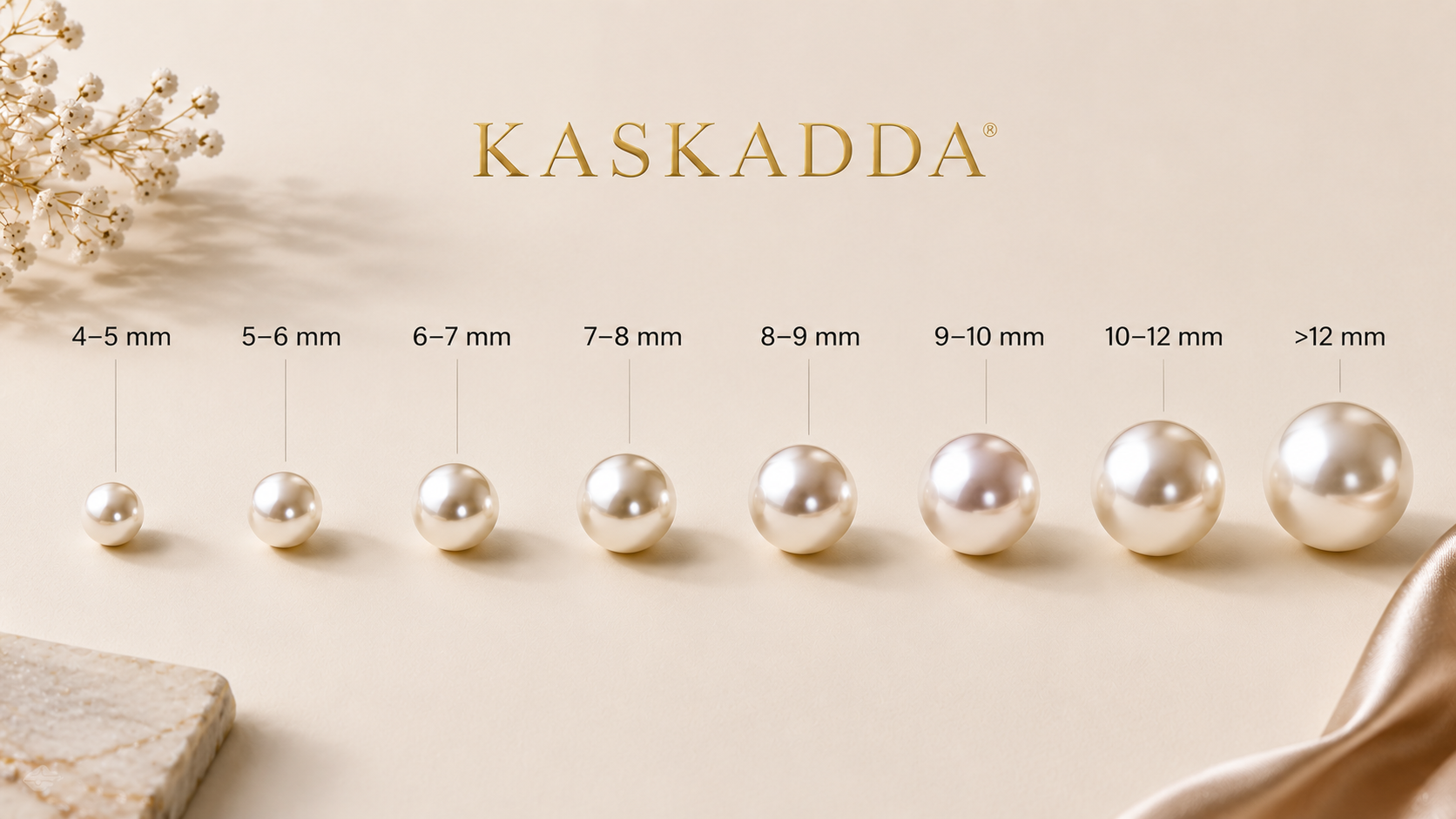
Pearl sizes and their visual effect
4–5 mm
4–5 mm pearls are extremely delicate and almost behave like a luminous texture around the neck. They are among the best choices for layering and modern daytime outfits.
These models are especially appreciated by women who want jewellery that feels refined and easy to wear.
5–6 mm
These sizes preserve the subtle elegance of small pearls while offering slightly more visual presence. They are probably among the most versatile sizes for frequent wear.
6–7 mm
Many people consider this size to be the perfect balance between subtlety and visible elegance. The necklace is clearly noticeable without dominating the entire outfit.
These models work particularly well in:
- business outfits;
- elegant dresses;
- monochrome looks;
- minimalist styling.
7–8 mm
Pearls of this size already have a stronger presence and give the necklace a more elegant appearance.
In natural light, the difference between 6–7 mm and 7–8 mm pearls becomes immediately visible on the neck, especially with necklaces worn close to the base of the neck.
8–9 mm
These models already enter a more sophisticated and visually striking category. They are frequently chosen for premium jewellery and elegant outfits.
9–10 mm
9–10 mm pearls dramatically change the presence of a necklace. The jewellery becomes far more noticeable and begins to play a central role in the styling.
10–12 mm
These sizes are considered statement pieces and offer significant visual impact. Necklaces created with pearls of this size are often worn at events or paired with very clean and minimal outfits.
Over 12 mm
Pearls over 12 mm already belong to a completely different category. They are far rarer and instantly create a strong visual effect within an outfit.
These models never go unnoticed and are usually worn in very carefully balanced combinations. In many cases, the necklace itself becomes the main piece of the entire styling.
The difference between pearl sizes becomes extremely visible when the necklace is worn close to the base of the neck. For example, there may only be a few millimetres between 5–6 mm and 8–9 mm pearls, yet the final visual effect can be completely different.
In many situations, very large necklaces are not necessarily more elegant than delicate ones. Sometimes, a subtle strand of small pearls feels more modern and easier to wear than a very imposing necklace.
Comparison table – the main types of natural pearls
| Pearl type | Dominant appearance | Lustre | Associated style |
|---|---|---|---|
| Akoya | Round and luminous | Clear, mirror-like | Classic elegance |
| Edison | Large and expressive | Strong and warm | Modern statement |
| Tahitian | Dark, exotic | Deep | Sophisticated contemporary |
| South Sea | Very large and luminous | Silky | Luxury premium |
| Freshwater | Diverse and versatile | Variable | Versatile and modern |
The difference between Akoya, Edison, Tahitian, South Sea and freshwater pearls
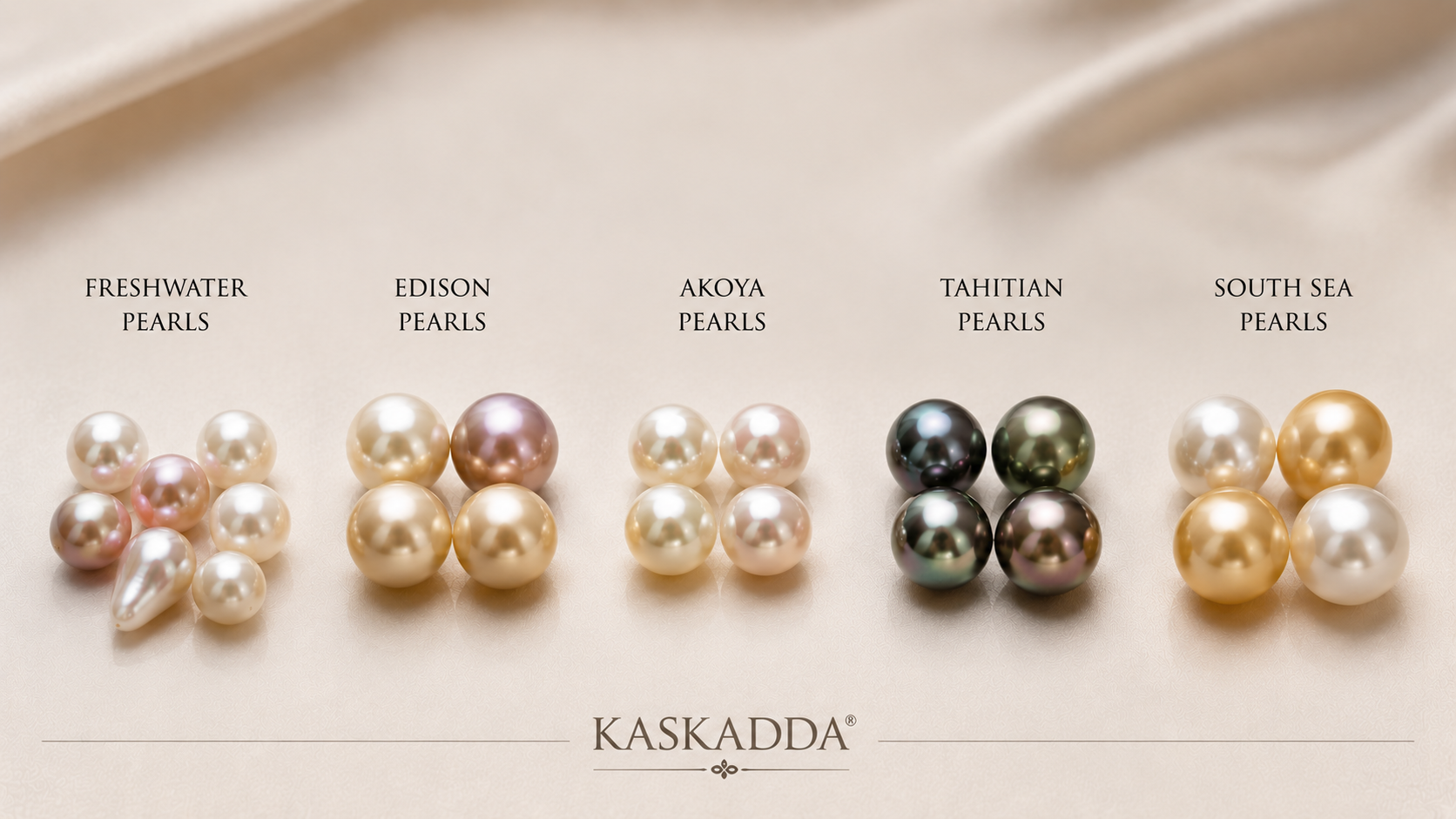
Akoya pearls
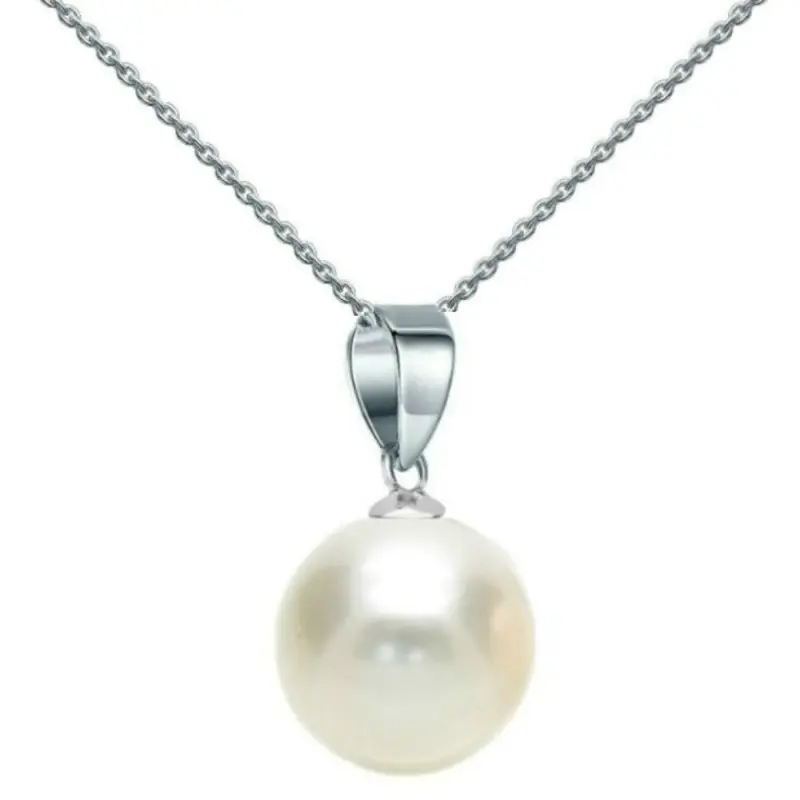
Akoya pearls are known for their perfectly round shape and powerful lustre. They have a clean, luminous appearance that makes them especially appreciated in classic elegant jewellery.
Compared to other types of pearls, Akoya pearls usually have:
- greater symmetry;
- very clear reflections;
- a more uniform surface;
- more balanced sizes.
These pearls are extremely popular in classic necklaces and jewellery intended for elegant occasions.
Edison pearls
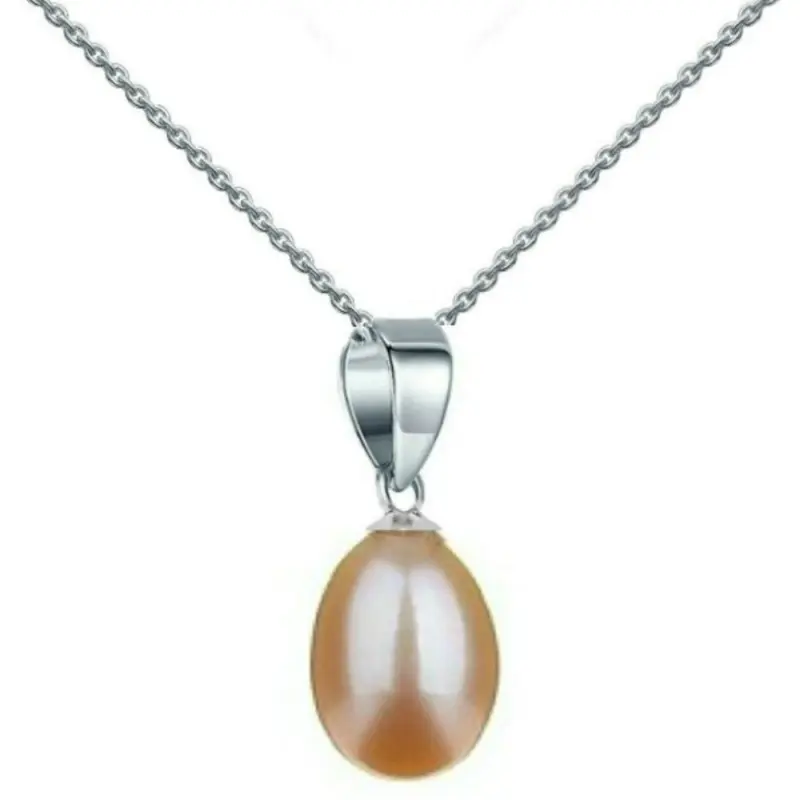
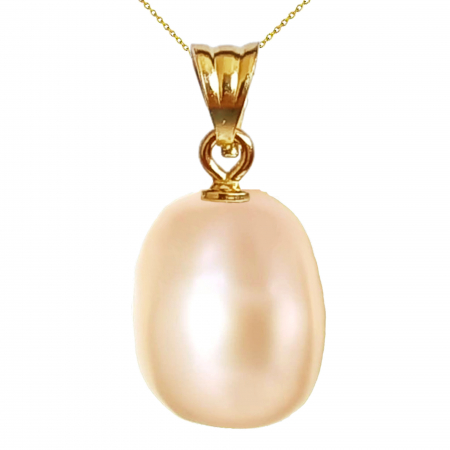
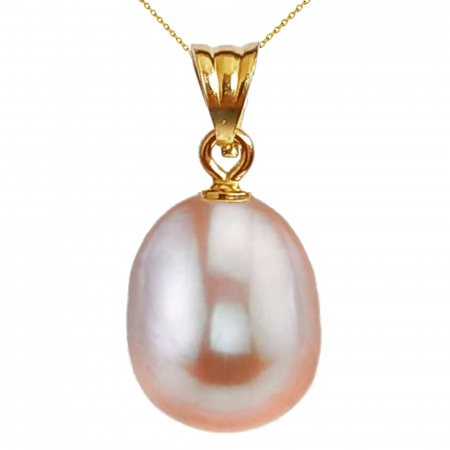
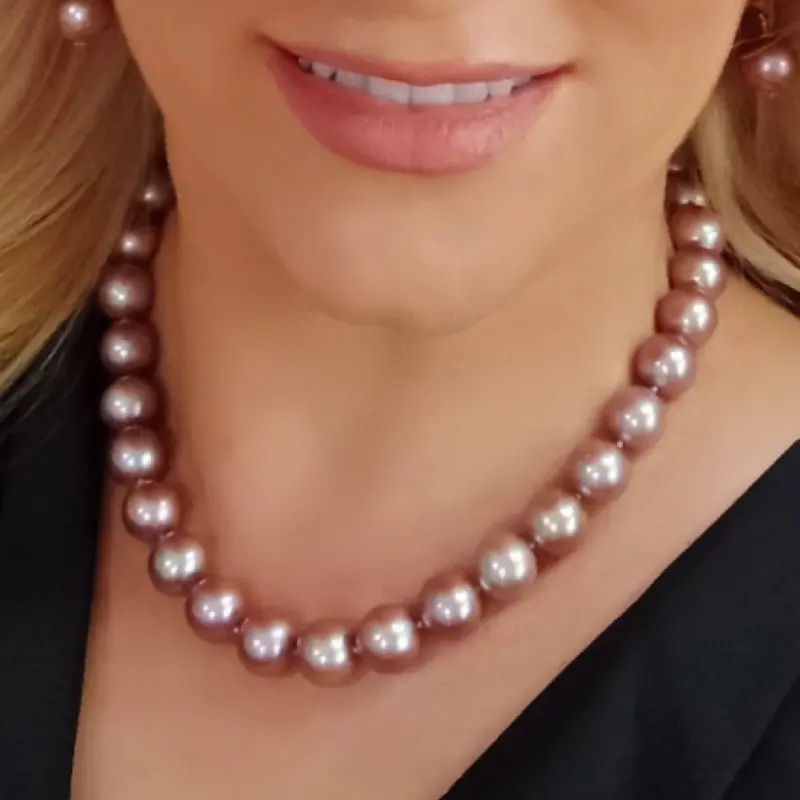
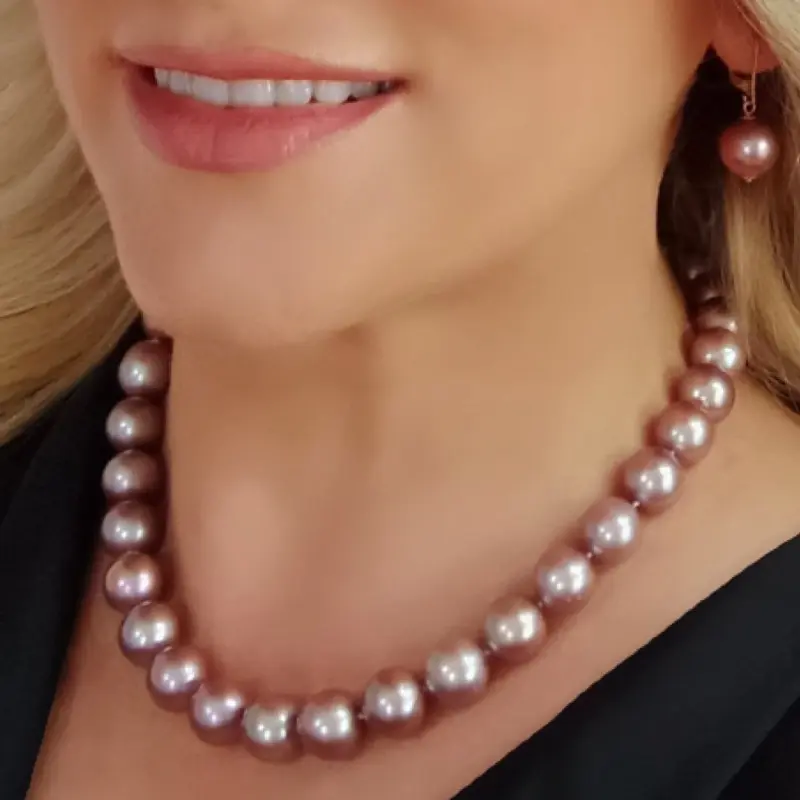
Edison pearls are appreciated for their larger sizes and spectacular colours, especially lavender and pink variations.
They have a more expressive appearance than Akoya pearls and work beautifully in statement jewellery or contemporary styling.
Many women choose Edison pearls precisely because they do not look overly classic and have more visual personality.
Tahitian pearls
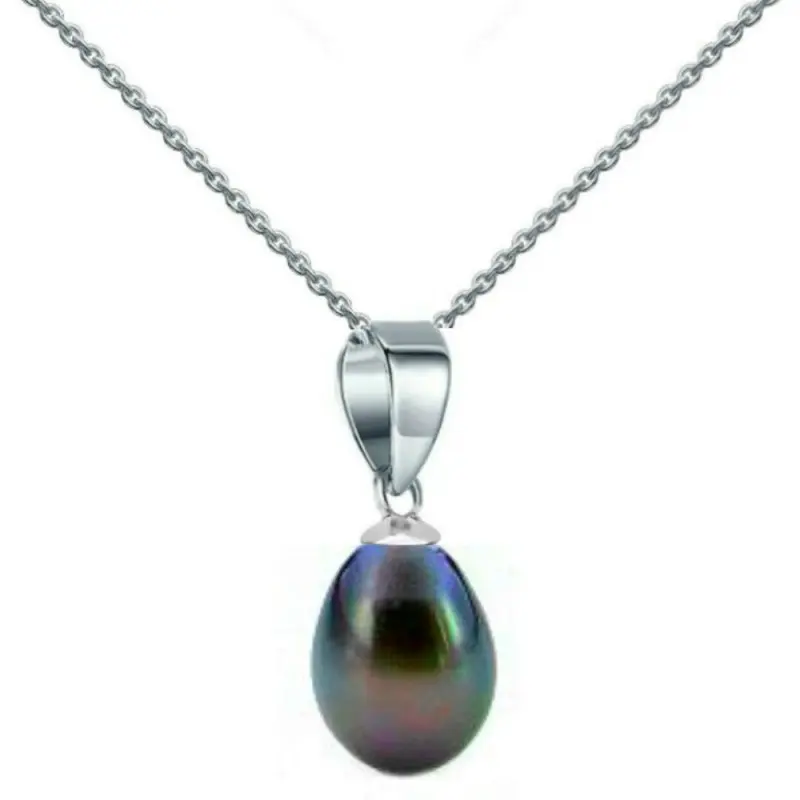
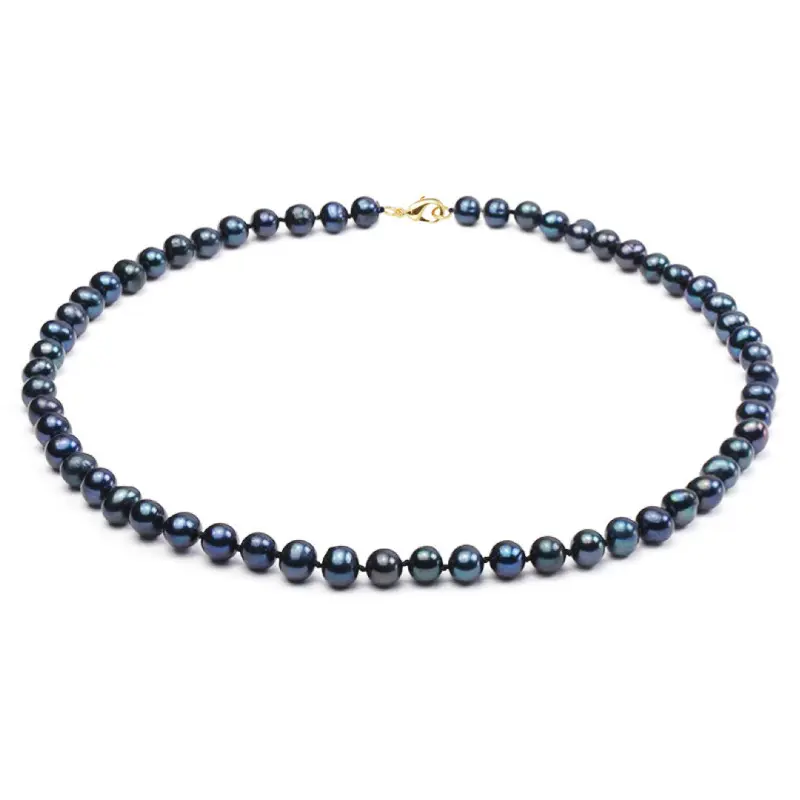
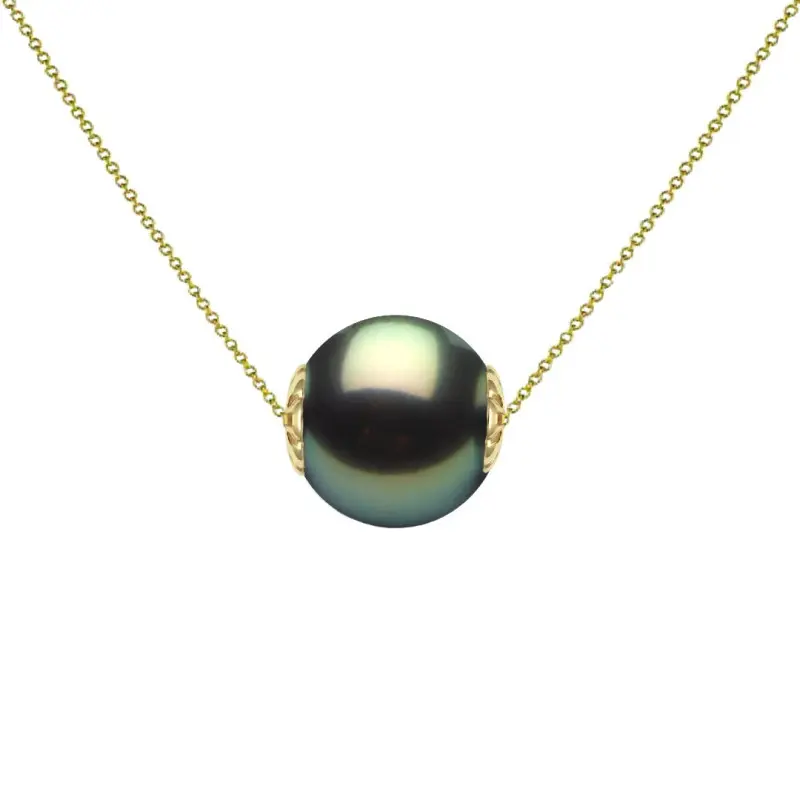
Tahitian pearls are known for their darker shades and exotic reflections. Tahitian pearl necklaces create stronger contrast and have a completely different presence compared to classic white pearls.
They work especially well in:
- monochrome outfits;
- contemporary styling;
- minimalist looks;
- modern elegant outfits.
South Sea pearls
South Sea pearls are among the largest and most valuable cultured natural pearls. They have an exceptionally luminous appearance and impressive sizes.
Necklaces created with these pearls are frequently associated with collector’s jewellery and highly elegant styling.
Freshwater pearls
Freshwater pearls are extremely versatile and allow for a very wide variety of shapes and designs.
These pearls are especially appreciated for:
- their diversity;
- their varied shapes;
- their different colours;
- their flexibility in design.
Round pearls vs baroque pearls
Round pearls
Round pearls give a necklace a very balanced and visually clean appearance. They are preferred by many people who are looking for an elegant and classic style.
These models work beautifully in simple outfits and in combinations where the jewellery should complement the outfit without becoming visually overwhelming.
Baroque pearls
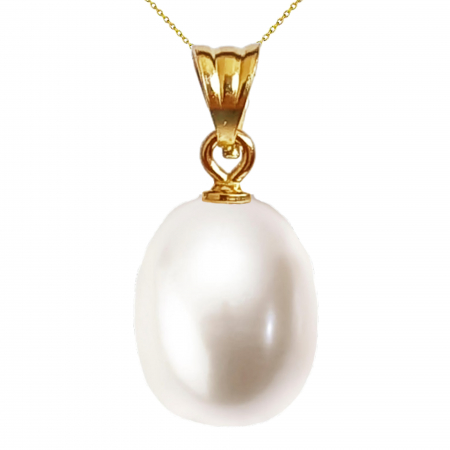
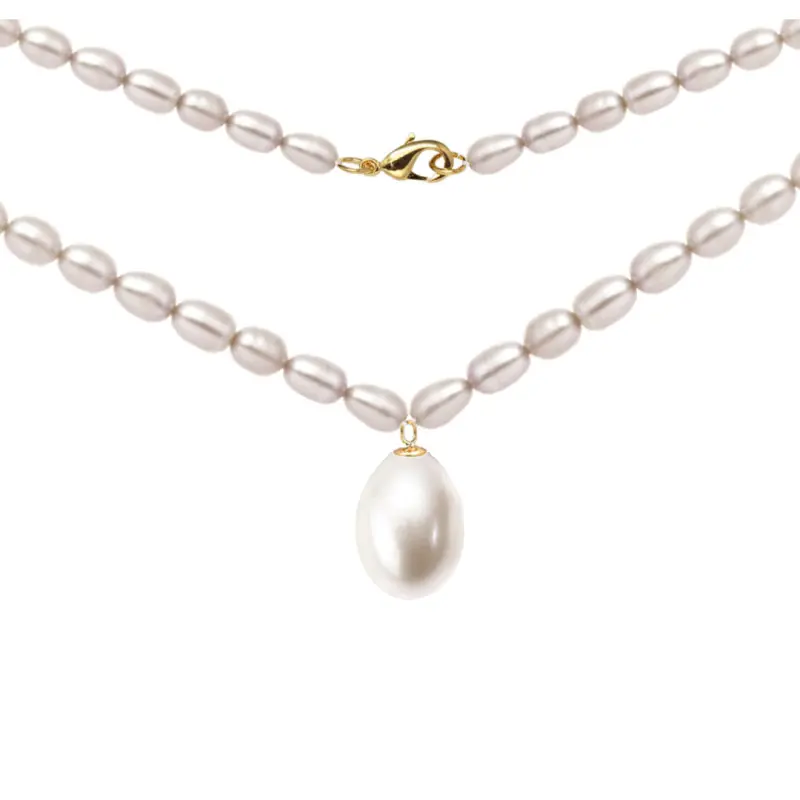
Baroque pearls have organic and less perfect shapes. It is precisely these irregularities that give them more personality and a more contemporary feel.
In recent years, these models have become extremely popular because they feel more natural and less rigid than perfectly symmetrical classic necklaces.
In addition, light reflects differently on the irregular surface of baroque pearls, creating a great deal of visual texture. Under certain lighting, the necklace almost seems to move.
Many women choose baroque pearls precisely because they are not perfect. They have more character and suit modern styling beautifully, especially now that fashion is far more relaxed than it was a few decades ago.
At the same time, baroque pearl necklaces pair exceptionally well with simple clothing. A white shirt, a minimalist blazer or a dress without prints allows the pearls to stand out much more beautifully.
How does pearl colour influence the look of a necklace?
White pearls
White pearls are the most versatile and the easiest to integrate into different clothing styles. They work beautifully in both elegant combinations and minimalist modern styling.
Cream pearls
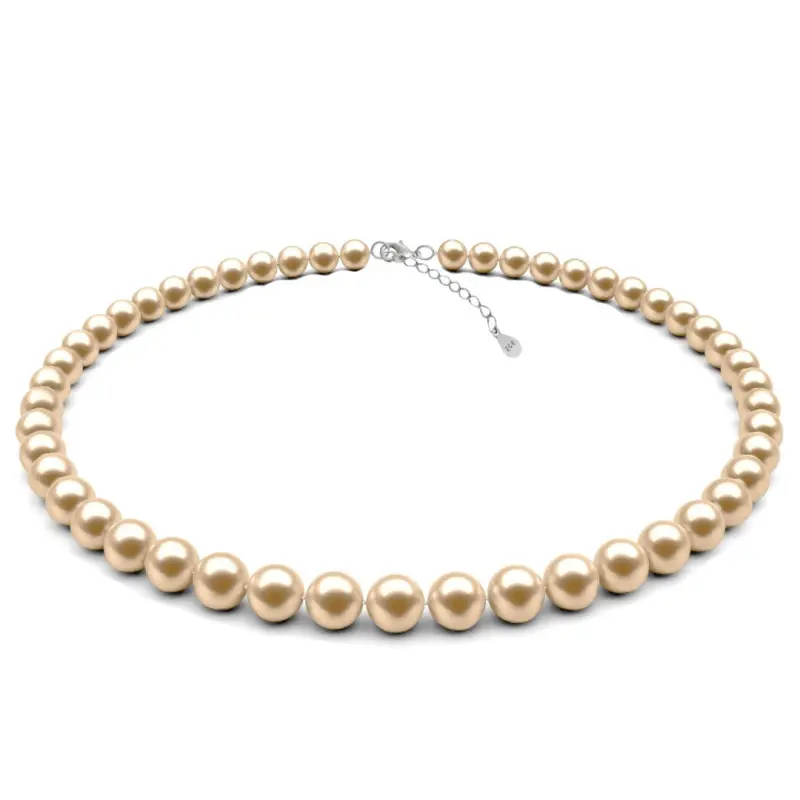
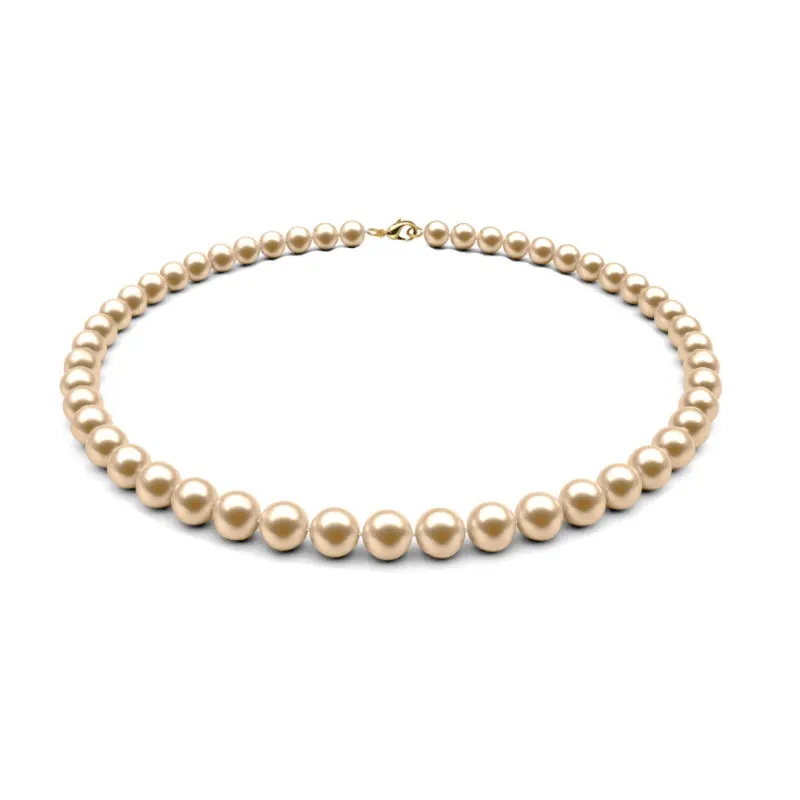
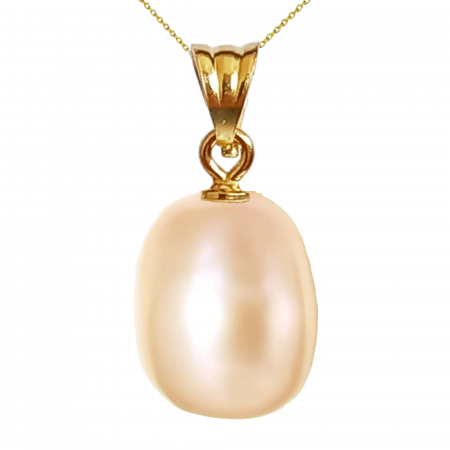
Cream pearls have a warmer visual tone and pair especially well with neutral shades and natural fabrics.
Pink pearls
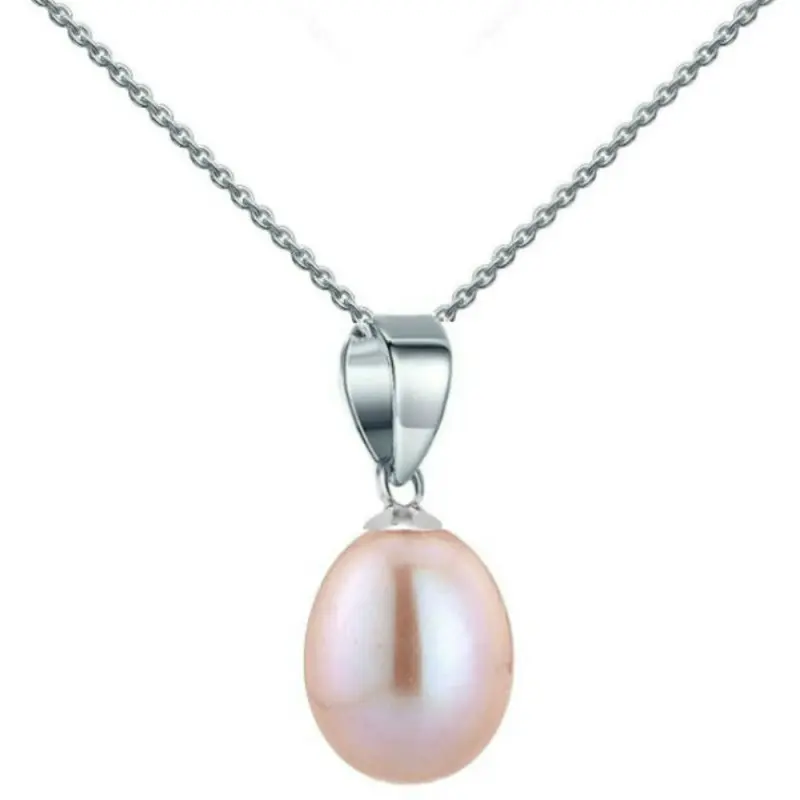
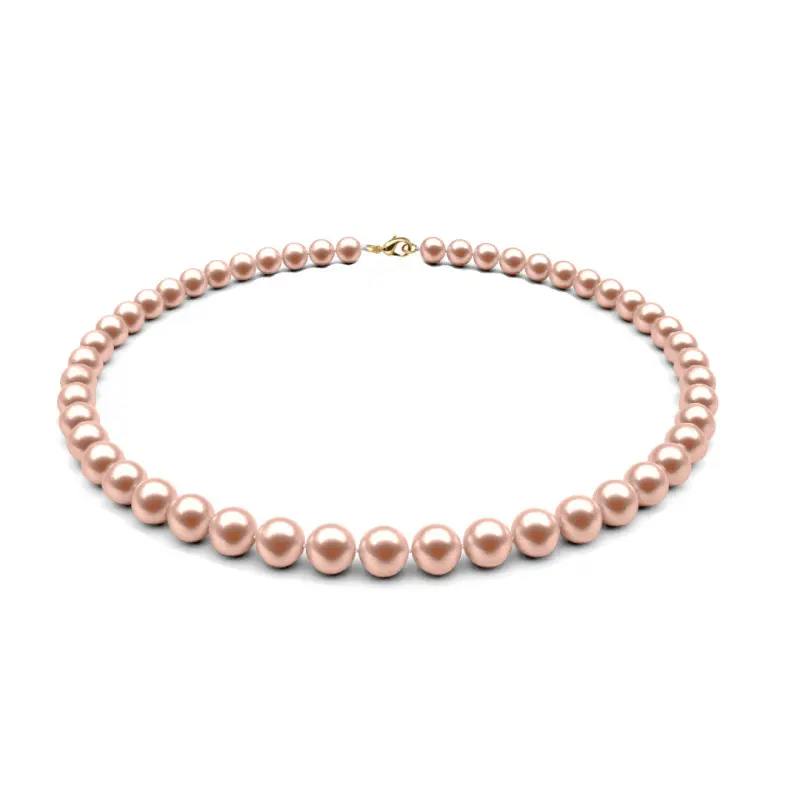
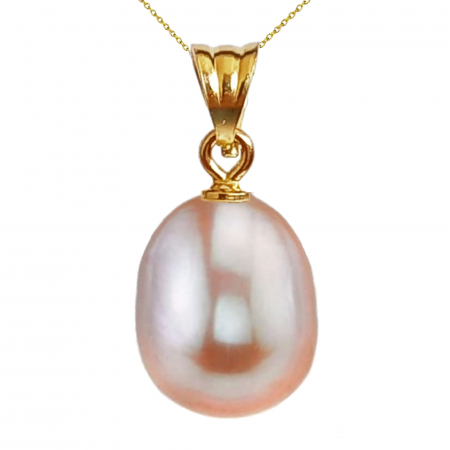
Pink pearls have a softer and more delicate appearance and are frequently preferred in fine jewellery or very feminine combinations.
Lavender pearls
Lavender pearls feature subtle violet reflections and give a necklace a distinctly different look compared to classic pearl shades.
These models are appreciated by many women who want something more expressive without choosing jewellery that feels overly elaborate.
Dark pearls
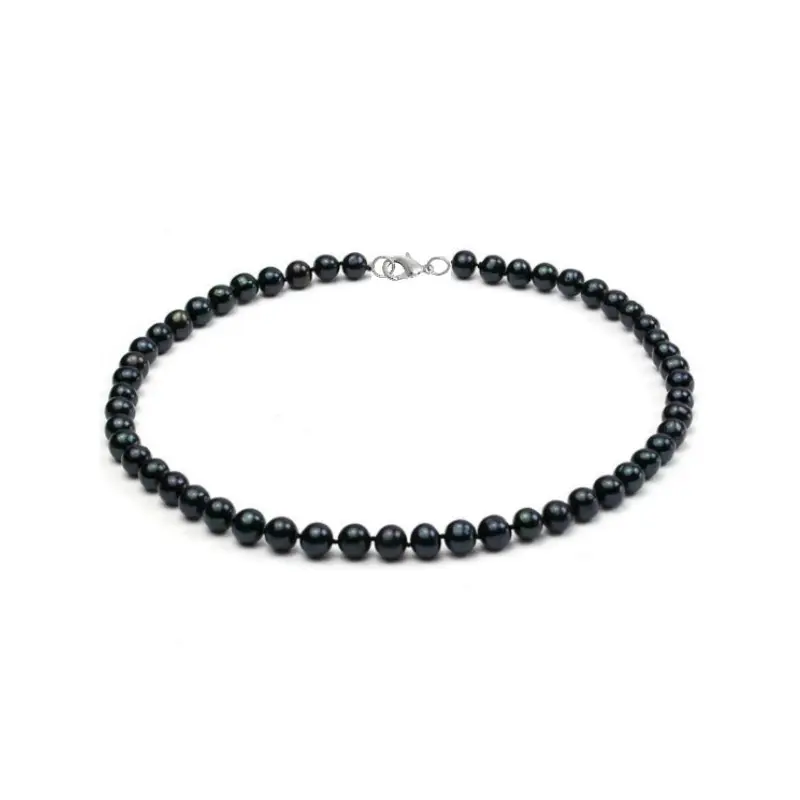
Tahitian pearls and darker pearl shades create stronger contrast and have a much more noticeable presence in styling.
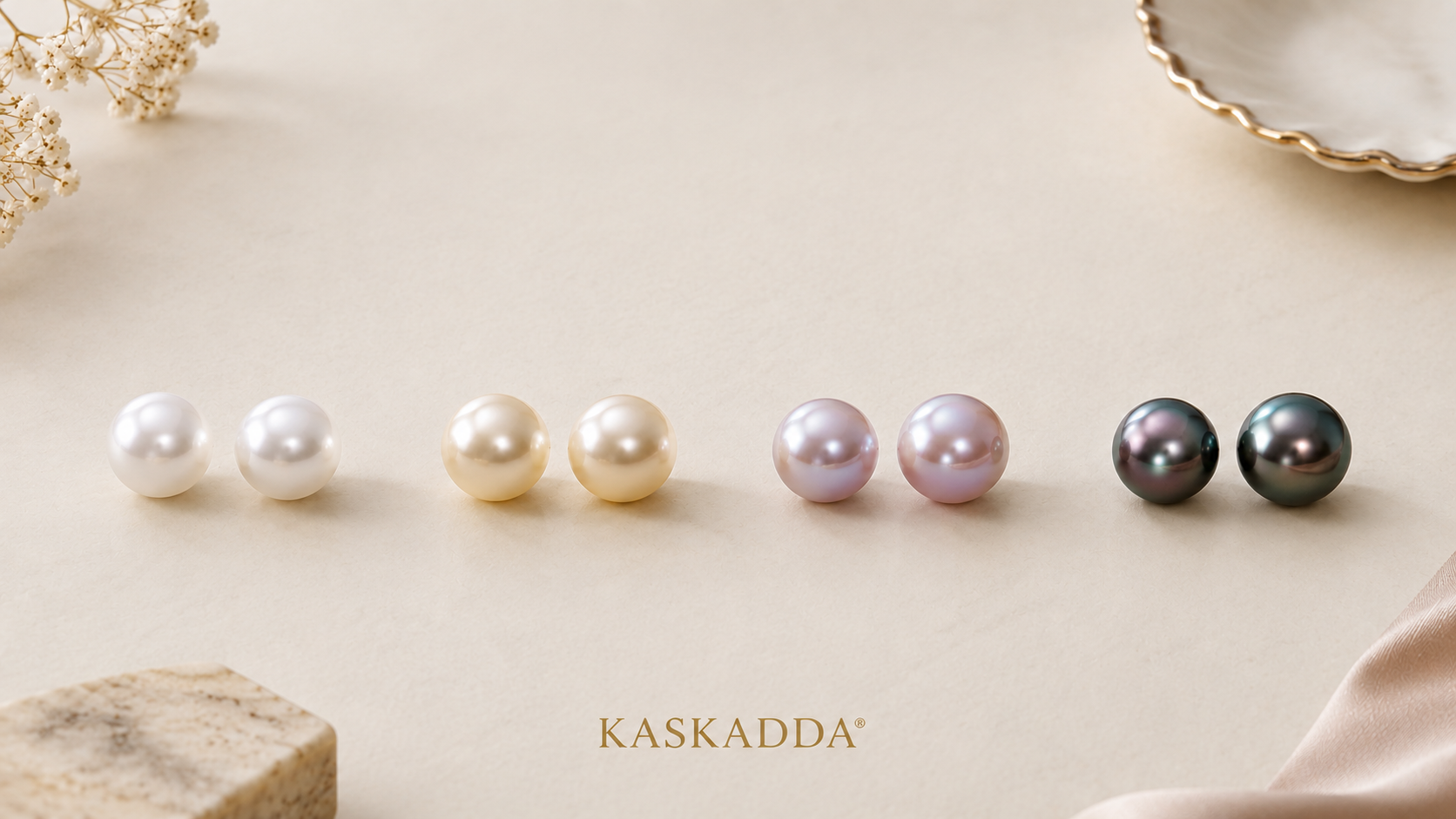
In necklaces, the differences between pearls become visible very quickly, especially when they are placed side by side. Lustre, shape, colour and the harmony between pearls strongly influence the final appearance of the necklace. For more context about Akoya, Edison, Tahitian, South Sea and baroque pearls, as well as pearl quality grading, you can also read the article about the different types of cultured natural pearls.
Comparison table – the main natural pearl colours
| Pearl colour | Visual appearance | Mood and style | What they pair best with |
|---|---|---|---|
| White | Bright and clean | Classic, elegant, versatile | White shirts, office outfits, minimalist looks, elegant dresses |
| Cream / Pink | Warmer and softer visually | Soft, feminine, natural | Nude tones, pastels, natural fabrics, elegant daytime styling |
| Lavender | Subtle violet reflections | Modern, expressive, distinctive | Contemporary outfits, greys, nude shades, minimalist styling |
| Tahitian / Dark | Deep and contrasting | Sophisticated, exotic, contemporary | Monochrome outfits, black, modern elegant styling |
A pearl necklace becomes even more striking when paired with the right earrings. If you would like to discover the differences between designs, sizes and pearl types, you can also read the complete guide to natural pearl earrings.
How do you choose a pearl necklace if it is your first one?
Many people buy their first pearl necklace without knowing exactly which size, length or type of pearl would suit them best. In reality, the decision is often much simpler than it appears.
If you are looking for a necklace that you can wear frequently and in a variety of settings, the most balanced choices are usually necklaces made with 4–7 mm pearls and princess-length or choker-style designs. These pieces pair easily with office outfits, elegant looks and premium casual wear alike.
For those who prefer understated jewellery, white and cream pearls remain among the most versatile options available. If you are drawn to jewellery with a stronger visual presence, Edison pearls, Tahitian pearls or designs featuring larger pearls can be particularly appealing choices.
It is also worth considering where you are most likely to wear your necklace. For everyday use, many people prefer finer designs that integrate effortlessly into their wardrobe. For formal events or special occasions, larger pearl necklaces can create a more striking visual impact.
Ultimately, the best pearl necklace is the one you genuinely enjoy wearing. A highly valuable piece of jewellery that stays in its box will always bring less satisfaction than a necklace chosen to fit naturally into your personal style.
What we have learned over the years about choosing pearl necklaces
After many years of working exclusively with natural pearls and speaking with thousands of customers, we have noticed that certain preferences appear surprisingly often.
People purchasing their first pearl necklace most often choose designs made with white pearls measuring between 4 and 7 mm. These offer an excellent balance between elegance and wearability and can be incorporated effortlessly into a wide range of outfits.
In recent years, we have also seen steadily growing interest in choker-style pearl necklaces. They are appreciated for their modern appearance and for how well they complement today's fashion trends, which tend to be more relaxed and minimalist than in the past.
Another interesting observation is that many people initially begin their search looking for very large pearls, but eventually choose medium-sized designs. In most cases, these prove to be more versatile and are worn more frequently.
On the other hand, Edison pearls, Tahitian pearls and baroque pearl designs are often preferred by those looking for a piece of jewellery with greater character and a style that differs from the classic image of a pearl necklace.
Perhaps the most important observation is that there is no single necklace that suits everyone. The most beautiful necklace is usually the one that naturally complements the style, wardrobe and personality of the person wearing it.
How should pearl necklaces be cared for?
Natural pearls are more delicate than many other stones or materials used in jewellery, which means they require more careful handling.
Direct contact with perfume, hairspray or cosmetic products can gradually affect the surface of the pearl. For this reason, many people prefer to put on their pearl necklace only after finishing their makeup and applying perfume.
Pearls should be stored separately from other jewellery to avoid scratching their surface. In addition, necklaces strung on natural silk should be stored in a way that prevents unnecessary tension on the thread.
After wearing, pearls can be gently wiped with a soft cloth to remove traces of cosmetics or perspiration.
For necklaces worn frequently, periodic restringing is perfectly normal. Over time, the thread can loosen slightly, especially in heavier designs.
Why do pearl necklaces continue to work so well in modern fashion?
Probably because very few pieces of jewellery manage to combine natural beauty and visual elegance so effortlessly. Pearls do not need to be extravagant to stand out, nor do they depend heavily on short-lived trends.
In addition, they adapt very easily depending on the styling. The same necklace can look completely different when worn with a simple evening dress, a white shirt or a minimalist T-shirt.
One thing that has become very clear in recent years is that women increasingly prefer jewellery that can be worn naturally, without appearing overly elegant. This is exactly where pearls work exceptionally well.
Delicate necklaces with small pearls have become popular because they can be integrated into everyday outfits almost effortlessly. The idea that pearls should be reserved only for special occasions no longer exists.
At the same time, statement models continue to be highly appreciated in clean and simple combinations. A monochrome dress or a minimalist outfit can completely transform the way a large pearl necklace is perceived.
Pearls have also remained relevant because they have a visual texture that differs from most modern jewellery. They do not reflect light in a cold or metallic way, which makes them easier to integrate into contemporary styling, where many people are looking for materials that feel more natural and authentic.
It is precisely this combination of natural beauty, flexibility and effortless styling that explains why pearl necklaces continue to be so appreciated and why they constantly return in contemporary fashion.